
The UAE spans a narrow coastal strip along the Arabian Gulf and a vast interior desert that reaches into the Empty Quarter. Within that geography, the distance between a waterfront plot in Dubai Creek Harbour and an inland community in Dubai Hills Estate can be as little as 15 kilometres—but the environmental conditions, soil types, regulatory frameworks, and material performance requirements at each site are fundamentally different. A facade system that performs well on a sheltered inland plot will degrade rapidly on an exposed coastal site. A foundation strategy designed for stable desert sand will fail in the high-water-table, sabkha-affected ground conditions found along much of Abu Dhabi’s coastline.
At Merka, our architectural design work covers both contexts. We have active projects on the Abu Dhabi Corniche, Dubai Creek Harbour, Dubai Hills Estate, Jumeirah Village Circle, and Al Reem Island—sites with different exposures, soil conditions, and authority jurisdictions. This article breaks down the specific design decisions that change depending on whether a project sits on the coast or further inland.
Coastal Architecture: Salt, Wind, and Water
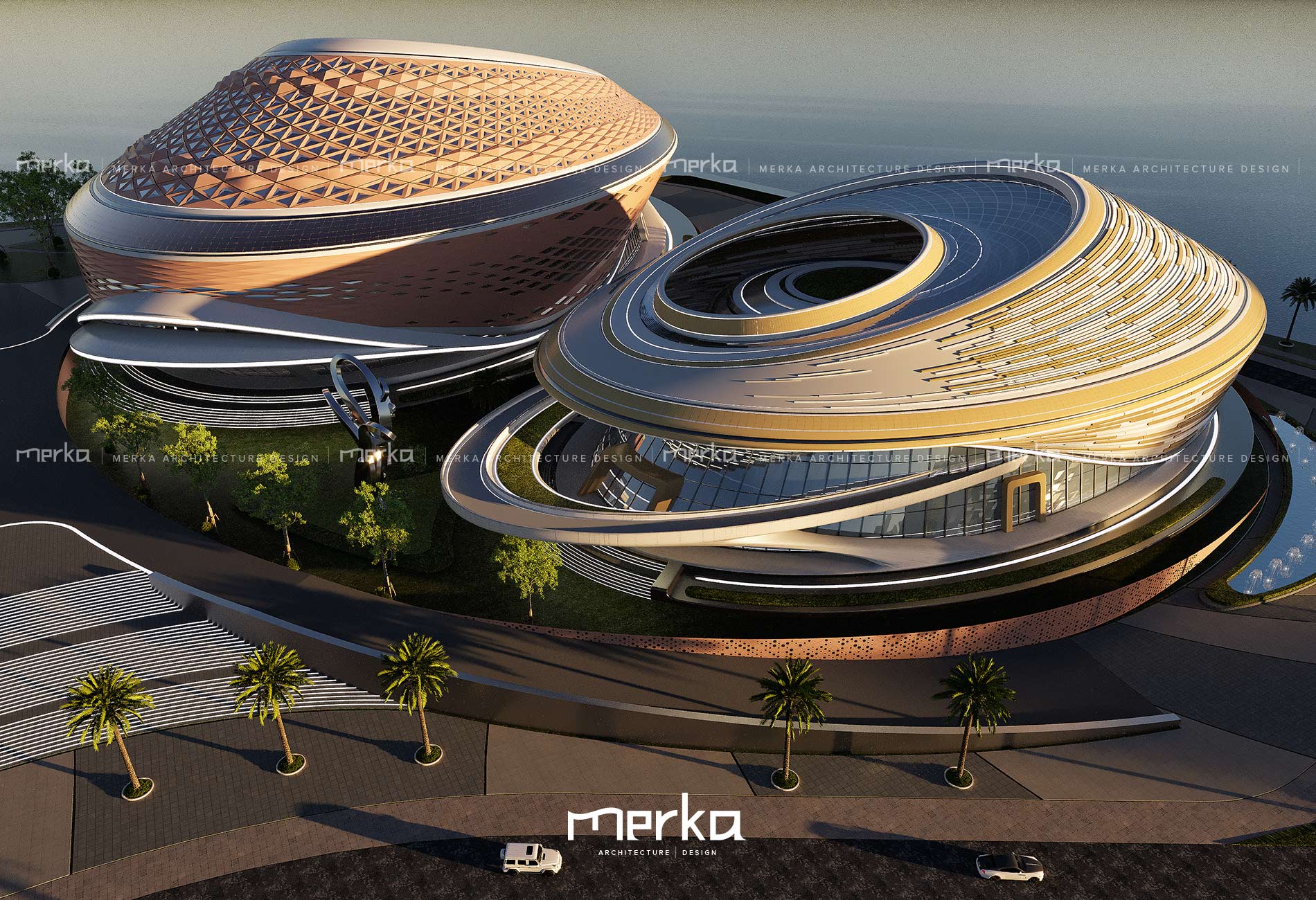
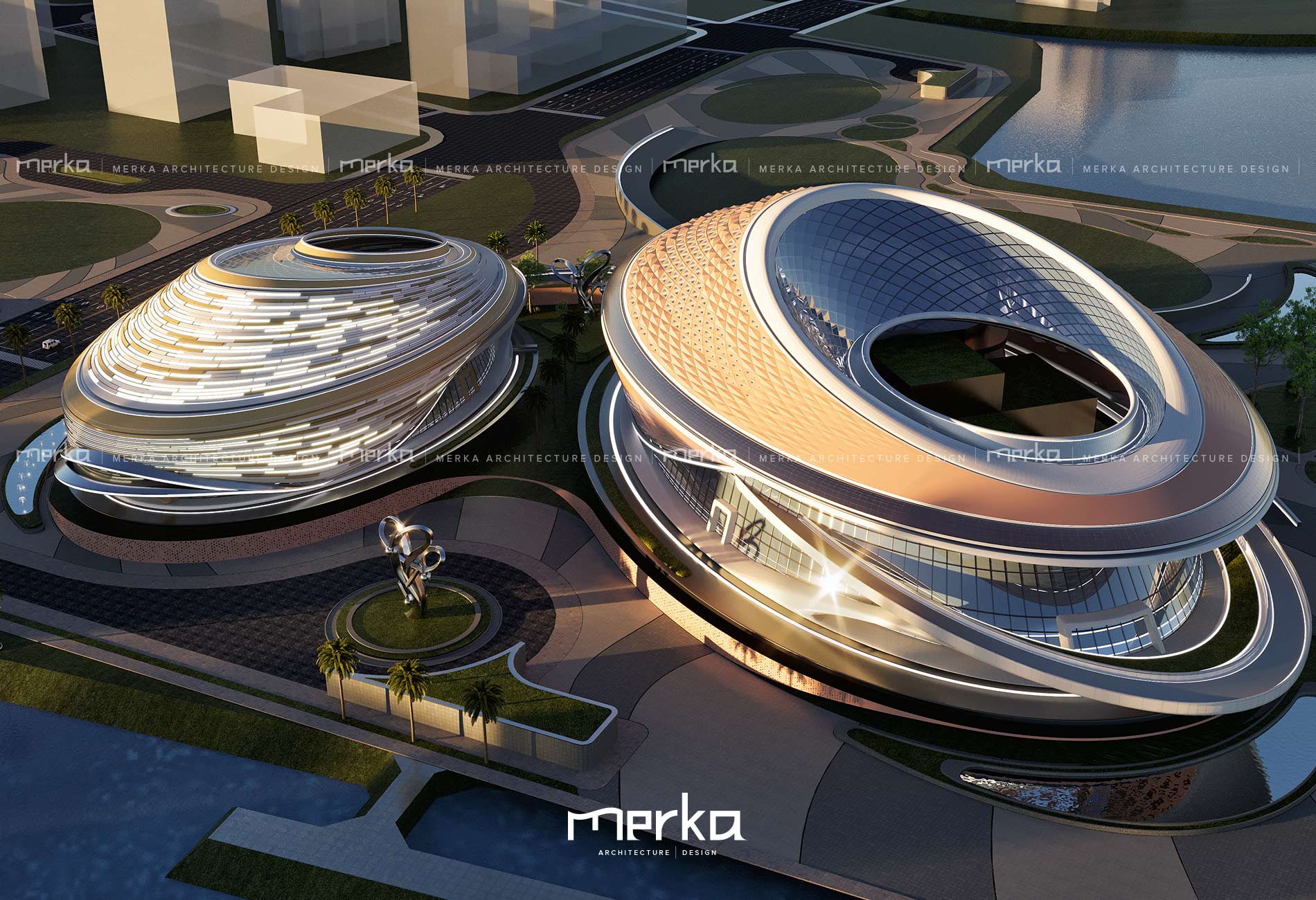
Coastal sites in the UAE face three overlapping environmental pressures. Humidity averages 60–80% through summer, salt-laden wind accelerates corrosion on unprotected metals and degrades porous stone finishes, and the water table sits close to the surface—sometimes within 1.5 metres in low-lying areas along the Abu Dhabi Corniche and Dubai Creek. For large-scale waterfront developments like Merka’s Corniche Orbital Mall and Cultural Complex (180,000–210,000 sqm on the Abu Dhabi waterfront), these conditions shape every decision from foundation depth to roof drainage.
Building form on coastal sites responds to wind. The Creekside Curved Residences at Dubai Creek Harbour (75,000–85,000 sqm) use a curved facade geometry that reduces wind pressure coefficients compared to flat-fronted elevations. The sculpted balcony edges channel airflow around the building rather than creating turbulence zones at corners, which matters for both structural loading calculations and resident comfort on upper-floor terraces. Where flat facades generate vortex shedding that causes noise and vibration, curved profiles distribute pressure more evenly across the envelope.
Material Performance on Coastal Sites
Salt spray is the single most destructive factor for building materials on UAE coastal sites. Chloride ions penetrate concrete cover and initiate rebar corrosion, which causes spalling and structural distress within 10–15 years if concrete mix design and cover depths are not specified for marine exposure. The Abu Dhabi International Building Code (ADIBC) specifies minimum concrete cover requirements for coastal zones, typically 50–75mm depending on the structural element and its exposure category.
For facade cladding, the hierarchy of salt resistance matters. Marine-grade stainless steel (316L) is specified for all exposed fixings and anchor systems. Aluminium requires anodised or powder-coated finishes rated to a minimum of 25 microns for coastal environments. Natural stone with water absorption below 3% by weight resists salt penetration; porous stones like travertine are best avoided entirely. These specifications are evaluated during material selection and locked before tender documentation is issued.
Timber elements on coastal facades require particular care. Untreated softwood can fail within two years. Modified timber species such as Accoya or thermally treated ash resist both moisture uptake and fungal attack, making them viable for screening and louvre systems even in high-humidity locations. We explored this in detail for villa-scale projects in our guide to organic villa exteriors in Al Raha, where the coastal Abu Dhabi microclimate drives every material choice.
Facade Strategy Differences
Coastal facades in the UAE carry a double burden: they must resist salt corrosion from the outside while managing high humidity levels within the wall build-up. Condensation inside the wall cavity is a common failure mode when vapour barriers are omitted or incorrectly positioned. The dew point in a coastal wall assembly can fall within the insulation layer during winter months, causing moisture accumulation that damages insulation performance and promotes mould growth on internal finishes. Compliance with facade regulations governs fire rating and thermal performance requirements, but vapour management is an additional design responsibility that sits with the architectural team.
Inland facades face a different set of pressures. Temperature differentials between day and night can exceed 20°C, creating thermal cycling that stresses rigid cladding joints and sealant lines. West-facing surfaces reach 65–70°C during peak afternoon hours, and dust accumulation on horizontal surfaces reduces the effectiveness of any self-cleaning coating within months. Facade detailing for inland sites prioritises thermal movement joints, UV-stable finishes, and angled profiles that shed dust through wind action.
Inland Architecture: Heat, Dust, and Thermal Mass
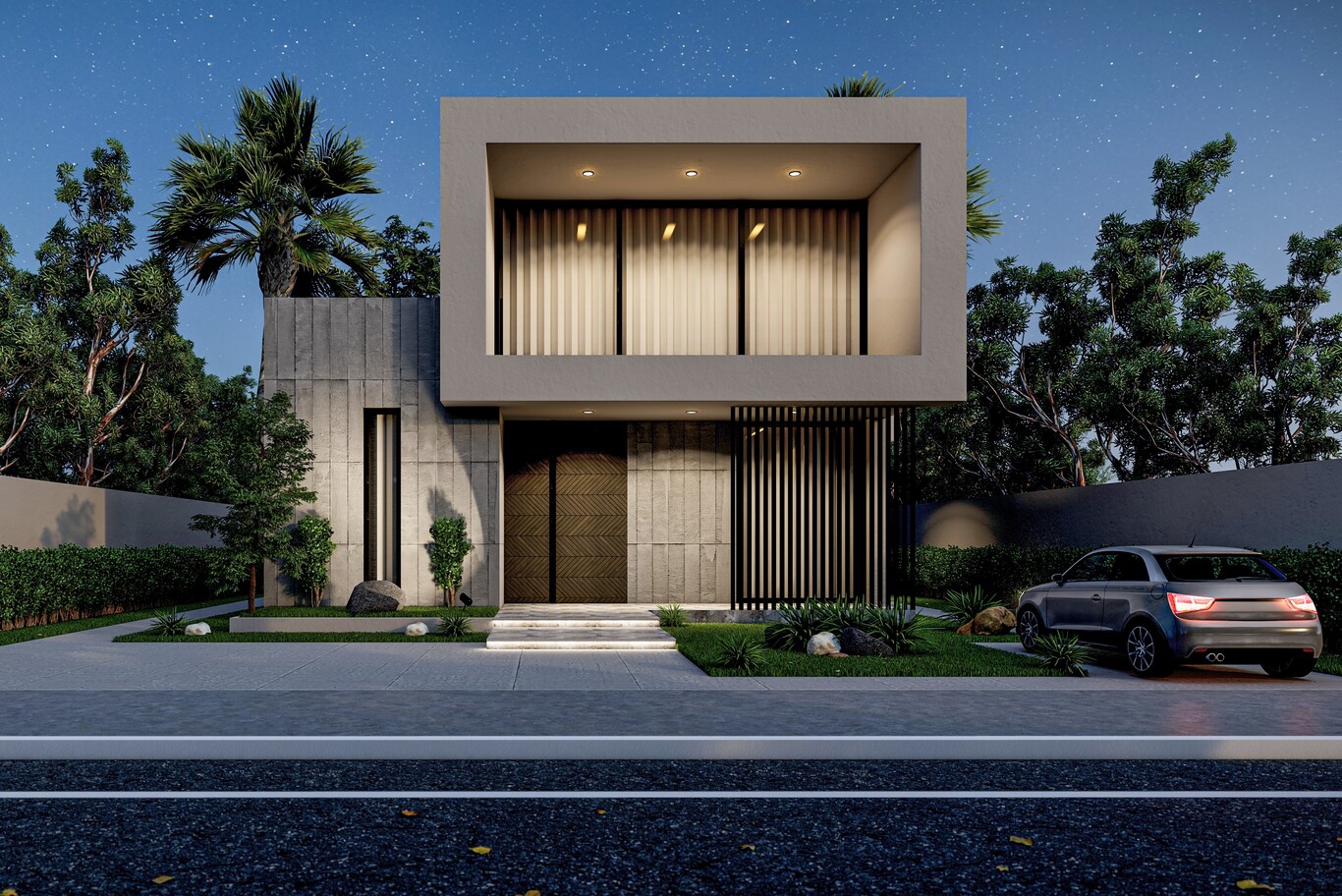
Inland communities in Dubai—Dubai Hills Estate, Jumeirah Village Circle, Arabian Ranches, Al Barsha South—sit in a lower-humidity environment (35–55% in summer) but face more extreme temperature swings. Merka’s Dubai Hills Residential Terraces (40,000–48,000 sqm) respond to this by using angular balconies that create self-shading on every floor. The shifting geometry ensures that each terrace shades the one below, reducing direct solar load on glazing and creating usable outdoor space during cooler months.
Urban heat island effects compound the challenge in denser inland developments. Hard surfaces—parking areas, roads, unshaded plazas—absorb solar radiation during the day and re-emit it at night, keeping ambient temperatures 3–5°C above surrounding undeveloped land. Merka’s approach to urban heat island strategies addresses this through landscape integration, reflective paving, and building orientation that promotes natural airflow between structures.
Envelope Performance for Inland Sites
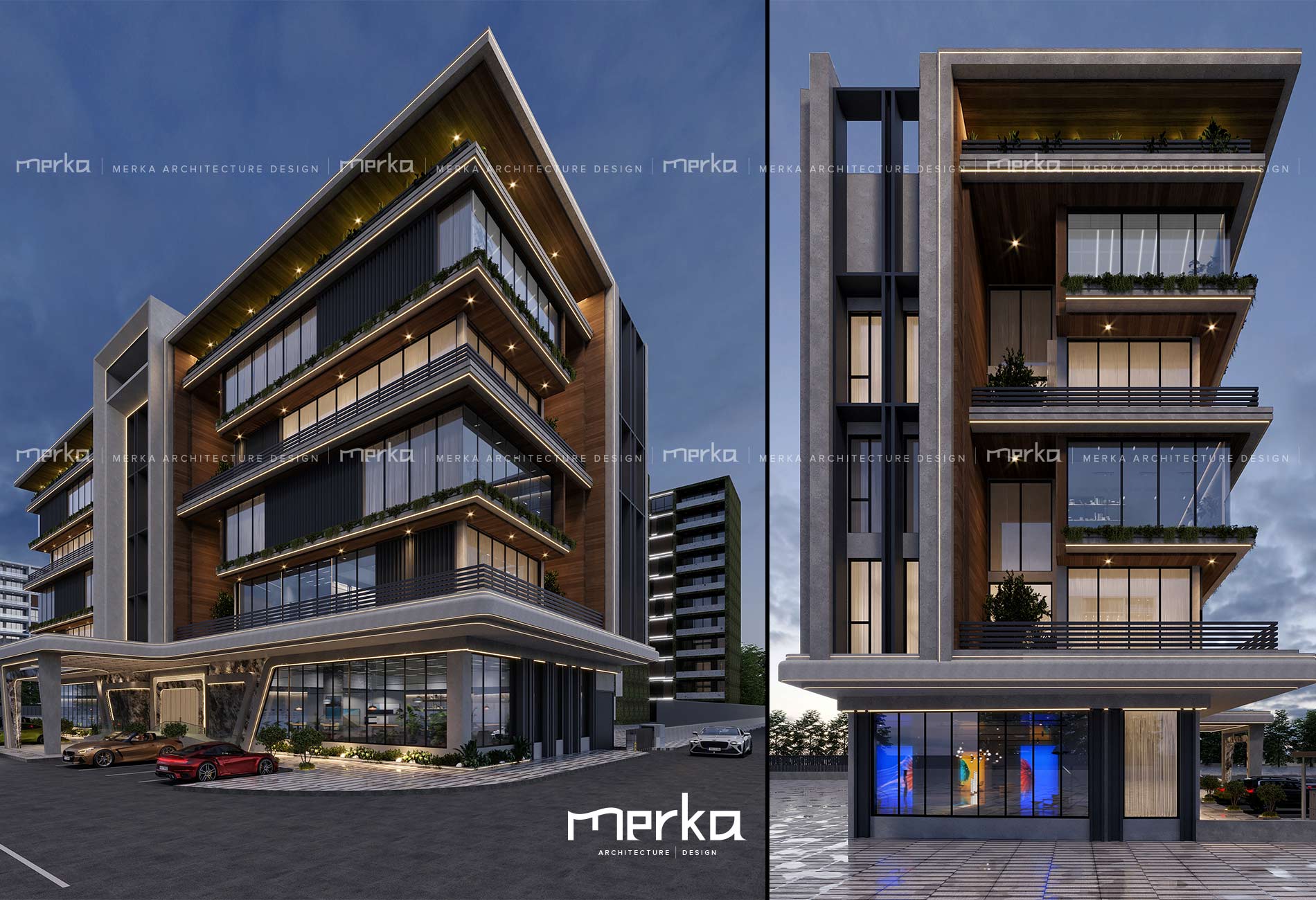
The JVC Residential Terrace Towers (60,000–70,000 sqm) demonstrate a typical inland envelope strategy: floor-to-ceiling glazing oriented north and east for daylight, solid insulated walls on the south and west elevations, and horizontal terrace projections that function as fixed shading devices. The stacked terrace geometry creates a building profile that appears light and open from the street while performing as a thermally calibrated envelope when viewed in section.
Insulation requirements for inland sites prioritise high thermal resistance (low U-values) over vapour management. Extruded polystyrene (XPS) and mineral wool are the most common choices, applied externally to avoid thermal bridging through the structural frame. Window-to-wall ratios above 40% on west facades require compensating measures—either enhanced glass specifications (solar heat gain coefficient below 0.25) or operable shading systems. These decisions align with passive design strategies that reduce cooling demand before mechanical systems are specified.
Starting with the Site, Not the Style
The most consequential design decisions for a UAE project are determined by the site’s environmental profile, not by stylistic preference. A building’s relationship to salt exposure, wind direction, solar path, soil bearing capacity, and water table depth defines its facade system, foundation type, orientation, and long-term maintenance requirements. These factors are assessed during conceptual design as the first step of any Merka project, before floor plans are drawn or elevations are composed.
Whether a project sits on the Abu Dhabi Corniche or in the interior of Dubai Hills Estate, the architecture should grow from what the site demands. That principle—responsive design driven by measurable conditions rather than imported aesthetics—is at the core of sustainable passive design and underpins every project in our practice.
You can explore coastal and inland projects across our project portfolio, or get in touch to discuss how your project’s site conditions should shape its design.
Frequently Asked Questions
What is the main difference between coastal and inland architecture in the UAE?
Coastal architecture must resist salt spray corrosion, high humidity (60–80%), and high water tables, which affect foundation design, facade materials, and vapour management within wall build-ups. Inland architecture deals with more extreme temperature swings (over 20°C between day and night), dust accumulation, and urban heat island effects. Each environment demands different facade systems, insulation strategies, and material specifications.
What materials should be avoided on coastal building facades in Abu Dhabi?
Porous natural stones like travertine degrade rapidly in salt-laden air. Untreated softwood timber fails within two years. Standard carbon steel fixings corrode and stain surrounding finishes. Unprotected mild steel balustrades and railings require replacement within five to seven years. Coastal sites require marine-grade stainless steel (316L) for fixings, anodised or powder-coated aluminium, and dense stone with water absorption below 3% by weight.
How does the water table affect building design on UAE coastal sites?
Along the Abu Dhabi Corniche and parts of Dubai Creek, the water table can sit within 1.5 metres of the surface. This requires tanked or waterproofed basement construction, dewatering during excavation, and foundation systems (typically bored piles) that extend below the unstable upper strata. It also affects landscape design, since ground-level planting beds need drainage layers to prevent root saturation from rising groundwater.
Why do inland buildings in Dubai need different facade strategies than coastal ones?
Inland facades experience greater thermal stress from temperature cycling (surface temperatures exceeding 65°C on west-facing walls) and dust accumulation rather than salt corrosion. Design priorities shift toward thermal movement joints, UV-stable finishes, reflective or self-shading geometries, and higher-performance insulation. Vapour barriers are less critical than on coastal sites because ambient humidity is lower (35–55% vs 60–80%).
What is the urban heat island effect, and how does it affect inland UAE developments?
The urban heat island effect occurs when hard surfaces like roads, parking areas, and building facades absorb solar radiation and re-emit it as heat, keeping built-up areas 3–5°C warmer than surrounding undeveloped land. In inland Dubai communities, this increases cooling energy demand and reduces outdoor comfort. Mitigation strategies include high-albedo paving materials, landscape integration, building orientation for natural airflow, and shaded pedestrian corridors.
Does the same building code apply to coastal and inland sites in the UAE?
The Abu Dhabi International Building Code (ADIBC) and Dubai Building Code both apply across their respective emirates regardless of site type, but specific requirements change based on exposure classification. Coastal sites trigger marine exposure categories that mandate higher concrete cover depths, corrosion-resistant reinforcement, and enhanced waterproofing specifications. Both codes require Estidama (Abu Dhabi) or Al Sa’fat (Dubai) sustainability compliance, but the strategies used to achieve compliance differ between coastal and inland locations.


