
A mosque is the most spatially disciplined building type an architect can work on. Every dimension traces back to a single fixed point: the qibla, the direction of the Kaaba in Makkah. That orientation locks the position of the mihrab, which sets the depth of the prayer hall, which determines the structural span, which governs the dome geometry or roof system above. Get the qibla wall wrong by even a fraction of a degree and the entire spatial sequence breaks down.
In the UAE, mosque design carries an additional layer of regulatory and cultural specificity. Federal law governs who may build and operate mosques. Emirate-level authorities control where they are located, how large they must be, and what sustainability standards they must meet. Master developer guidelines in planned communities add further constraints on height, massing, and material finish. At Merka, our architectural design team works across residential, commercial, hospitality, and institutional projects—including campus developments where a dedicated mosque sits alongside administrative, civic, and community buildings. The design thinking required for a mosque overlaps with broader architectural practice, but the tolerances are tighter and the cultural stakes are higher.
Who Regulates Mosque Design in the UAE
Three tiers of authority govern mosque construction. At the federal level, the Law Concerning the Organisation of, and Care for Mosques defines what constitutes a mosque, who may staff it, and what activities are permitted within it. The General Authority of Islamic Affairs, Endowments, and Zakat (GAIAE, commonly called Awqaf) oversees mosque affairs across all emirates except Dubai and Sharjah, which maintain their own departments.
At the emirate level, approval processes split along familiar lines. In Abu Dhabi, the Department of Municipalities and Transport (DMT) published the Abu Dhabi Mosque Development Regulations—a three-volume set covering planning, design, and operations. These regulations require every mosque to achieve a minimum 2 Pearl Estidama rating (one tier above the standard residential minimum of 1 Pearl) and mandate that a mosque be located within 350 metres—roughly a five-minute walk—of every home. In Dubai, the Islamic Affairs and Charitable Activities Department (IACAD) coordinates with Dubai Municipality on site allocation, and DM handles the building permit process. The architectural submission follows the same drawing and documentation standards as any other DM building permit, with additional review from IACAD on spatial programme and functional compliance.
For architects, the practical consequence is a dual-track approval: one channel for the religious and functional programme (Awqaf, IACAD, or the relevant emirate body), another for the building permit (ADM in Abu Dhabi, DM in Dubai). Both must align, and comments from one authority can trigger revisions that affect the other. Managing this interaction from the start prevents the circular revision loops that stall mosque projects for months.
Spatial Programme and Qibla Orientation
The prayer hall is the organising element of every mosque plan. Its depth (measured perpendicular to the qibla wall) and width determine how many worshippers can pray in rows (sufoof) at any given time. The standard spacing between rows is approximately 1.2 metres, and each worshipper occupies roughly 0.8 metres of width in a shoulder-to-shoulder row. These dimensions are fixed by practice, and they establish the structural bay module for the entire building: column grids, dome spans, and roof beams all derive from the prayer hall’s row geometry.
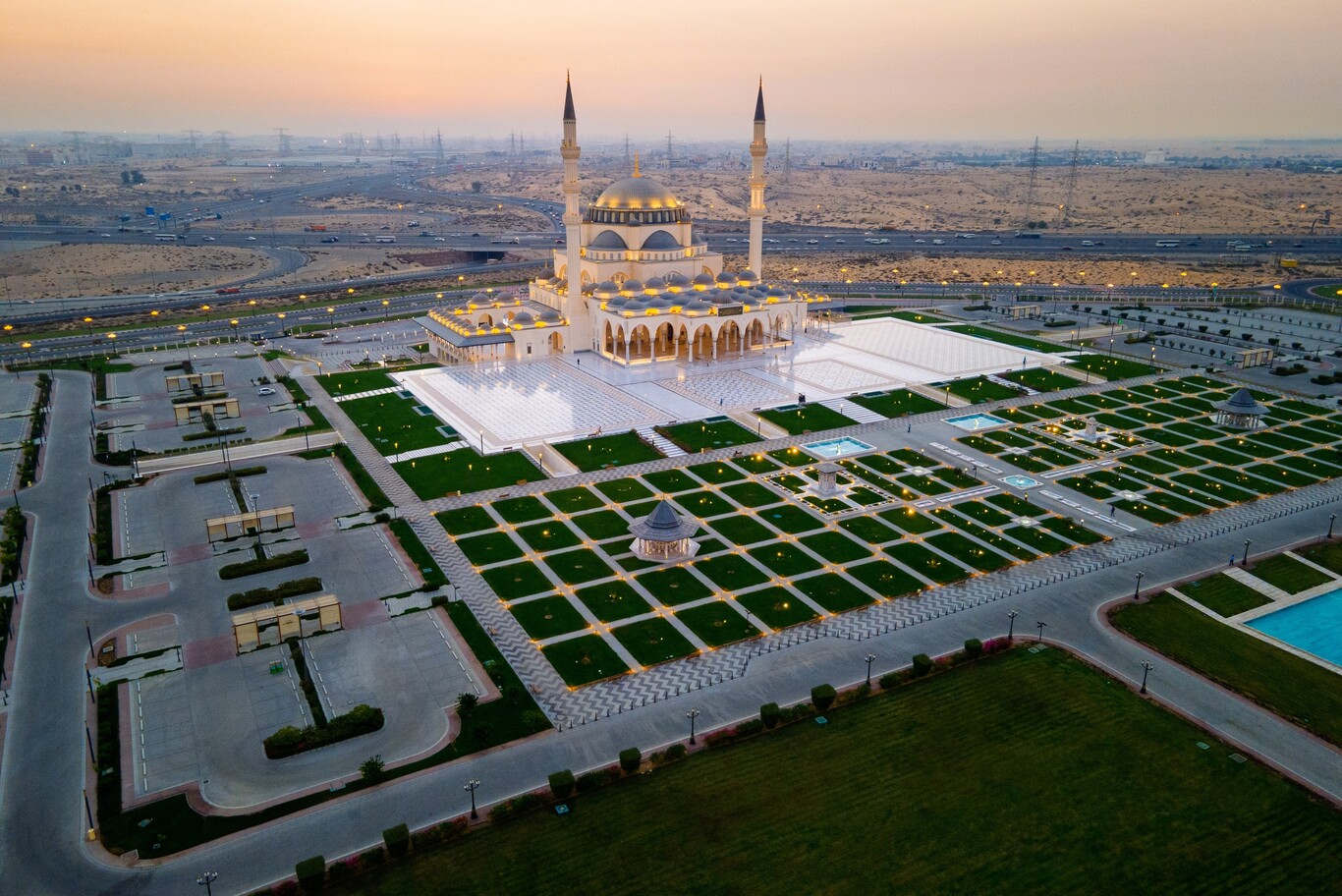
In the UAE, the qibla direction from Abu Dhabi is approximately 246° (west-southwest), and from Dubai approximately 253°. This means the qibla wall typically faces away from the street in many urban plot configurations, which affects entrance sequencing, ablution area placement, and minaret visibility from the public realm. When Merka designed the dedicated mosque within the Government Administration Complex in Abu Dhabi—a 14,000–18,000 sqm campus that also includes ministry headquarters, a formal reception villa, and a modern majlis—the qibla orientation dictated the rotation of the mosque relative to the campus’s primary arrival axis. The rest of the masterplan adjusted to maintain clear pedestrian routes between the mosque entrance and the campus forecourt, so worshippers and staff share a unified site circulation without conflicting movement patterns.
Beyond the prayer hall, the spatial programme includes an ablution area (wudu facilities for men and women, always positioned between the entrance and the prayer space so worshippers cleanse before entering), an imam’s room, a storage area for Qurans and prayer mats, shoe racks at entry thresholds, and often a separate female prayer area with its own entrance sequence and ablution facilities. Larger jame’e (Friday) mosques add a minbar, a larger forecourt or sahn, and community spaces for lectures and gatherings.
Materials, Geometry, and Craft
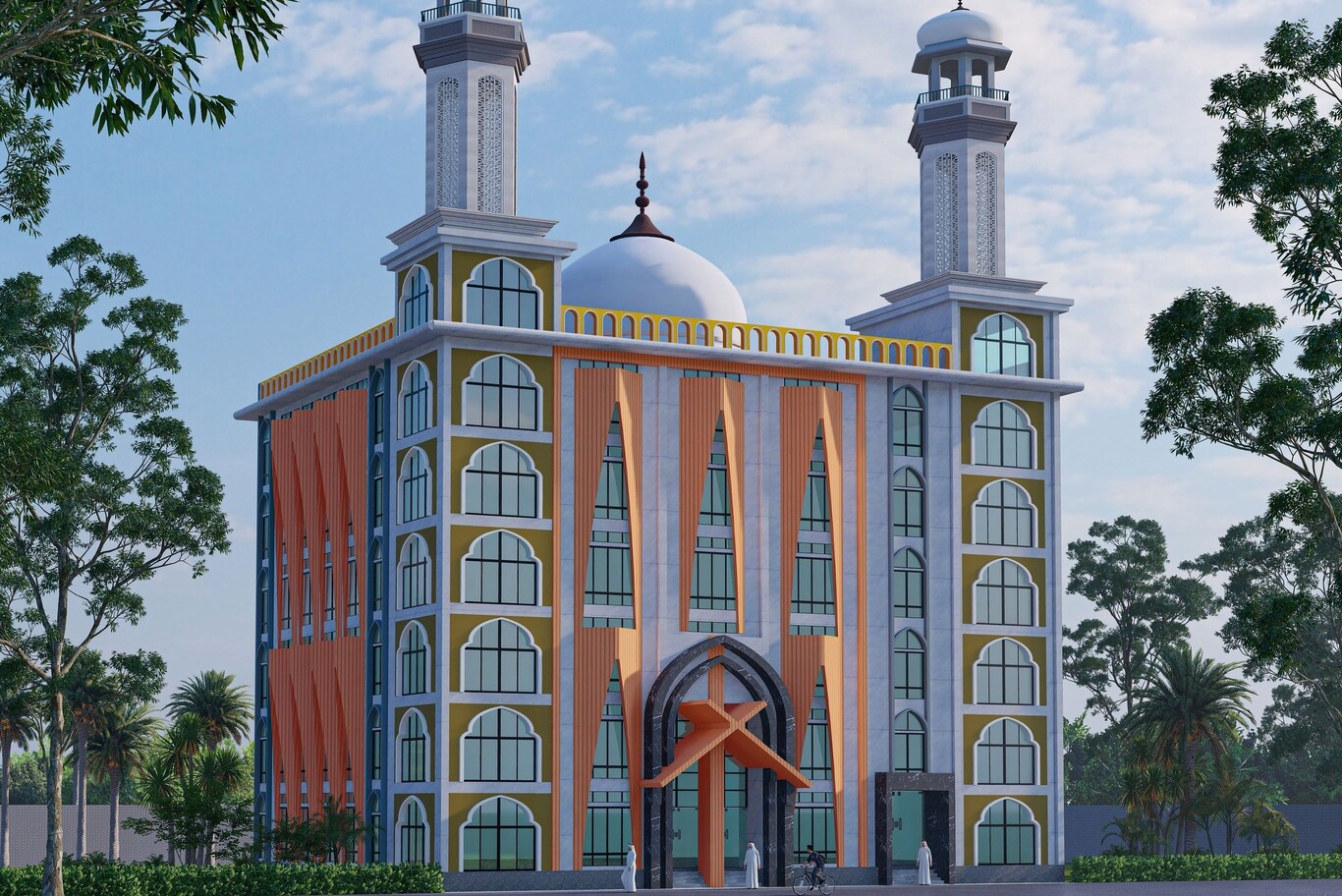
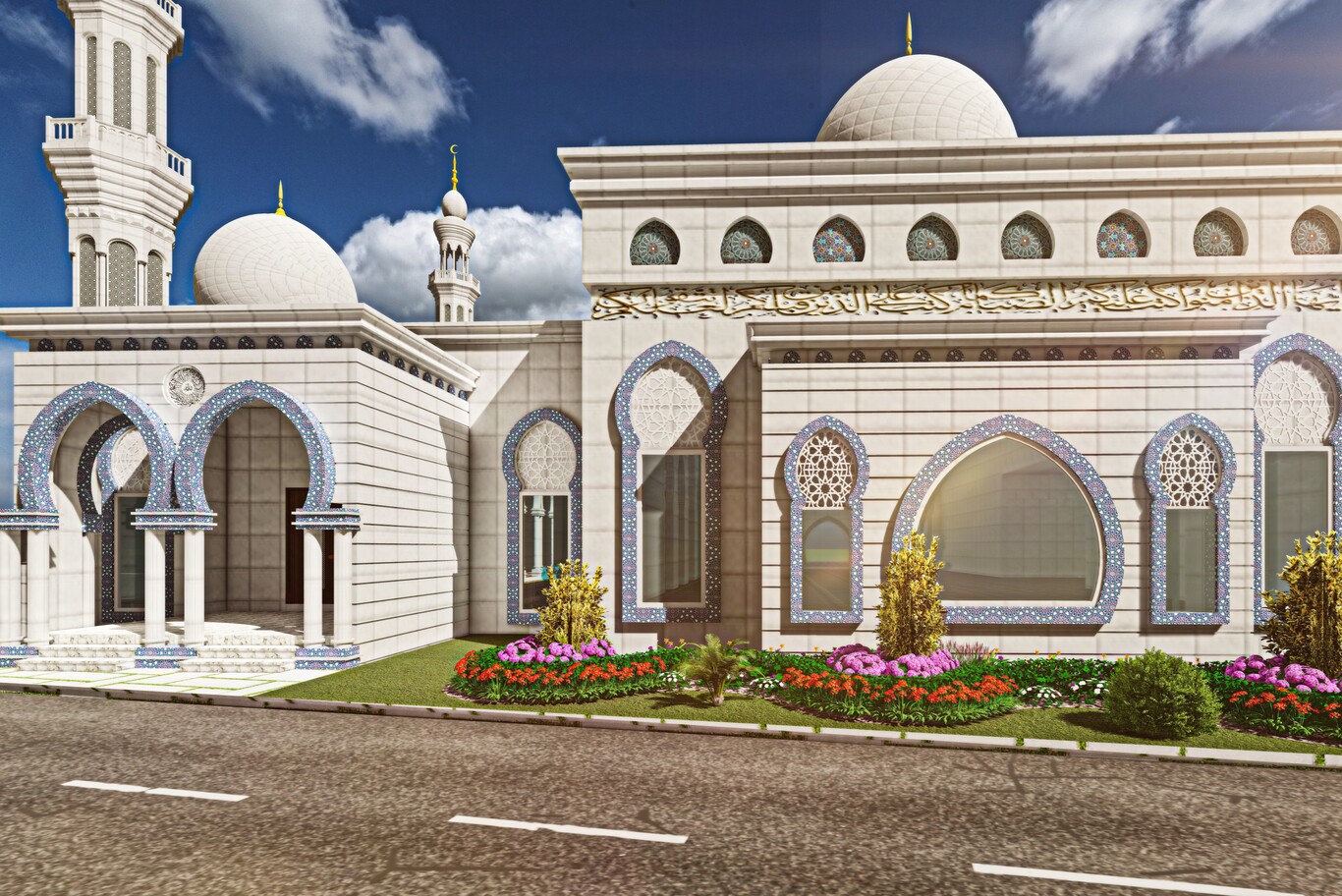
Mosque architecture in the UAE draws from a wide vocabulary of Islamic architectural traditions—Ottoman domes, Andalusian horseshoe arches, Mamluk stonework, Gulf vernacular wind tower proportions—but the structural and environmental logic behind these forms matters more than their decorative associations. A dome over a prayer hall works because it creates a column-free span that allows uninterrupted rows of worshippers. A courtyard works because it provides a shaded, ventilated transition zone between the street and the prayer space. An arcade (riwaq) around the courtyard works because it extends usable prayer area during overflow while protecting worshippers from direct sun.
Material choices in the UAE follow the same durability logic that applies to any building type. Stone cladding on mosque facades—typically limestone, marble, or sandstone—needs the same salt resistance and thermal performance analysis that residential and commercial projects require. The material selection process for a mosque differs only in the additional consideration of acoustic reflectivity: hard stone surfaces inside the prayer hall amplify the imam’s voice but also amplify ambient noise, which must be managed through geometry and surface treatment rather than soft furnishings alone.
Acoustic and Environmental Design
Sound clarity in a mosque prayer hall is a functional requirement, not an aesthetic preference. The imam’s voice must reach every worshipper without electronic amplification becoming the primary means of communication. Dome geometry helps: a hemispherical or pointed dome focuses reflected sound toward the centre of the prayer hall, while a flat ceiling scatters it. Coffered or muqarnas (stalactite) ceiling surfaces break up flutter echoes that occur between parallel hard surfaces. These acoustic strategies are resolved during design development, where ceiling profiles, wall angles, and surface materials are tested against reverberation time targets—typically 2.5 to 4 seconds for prayer halls, depending on volume.
HVAC design for mosques presents a distinctive challenge. Prayer halls experience sudden occupancy spikes—from empty to full capacity within minutes at prayer time—and worshippers sit and prostrate directly on the floor, which means the thermal comfort zone is concentrated in the lower 1.5 metres of the room rather than at standing height. Underfloor air distribution or displacement ventilation systems deliver conditioned air at floor level, where it is needed, rather than from ceiling-mounted diffusers that cool the upper volume first. This approach reduces energy consumption and improves thermal comfort where it counts. Compliance with facade regulations on envelope thermal performance is equally relevant for mosques, particularly on the large glazed openings that many contemporary designs use to flood the prayer hall with natural light.
Minaret Design and Urban Presence
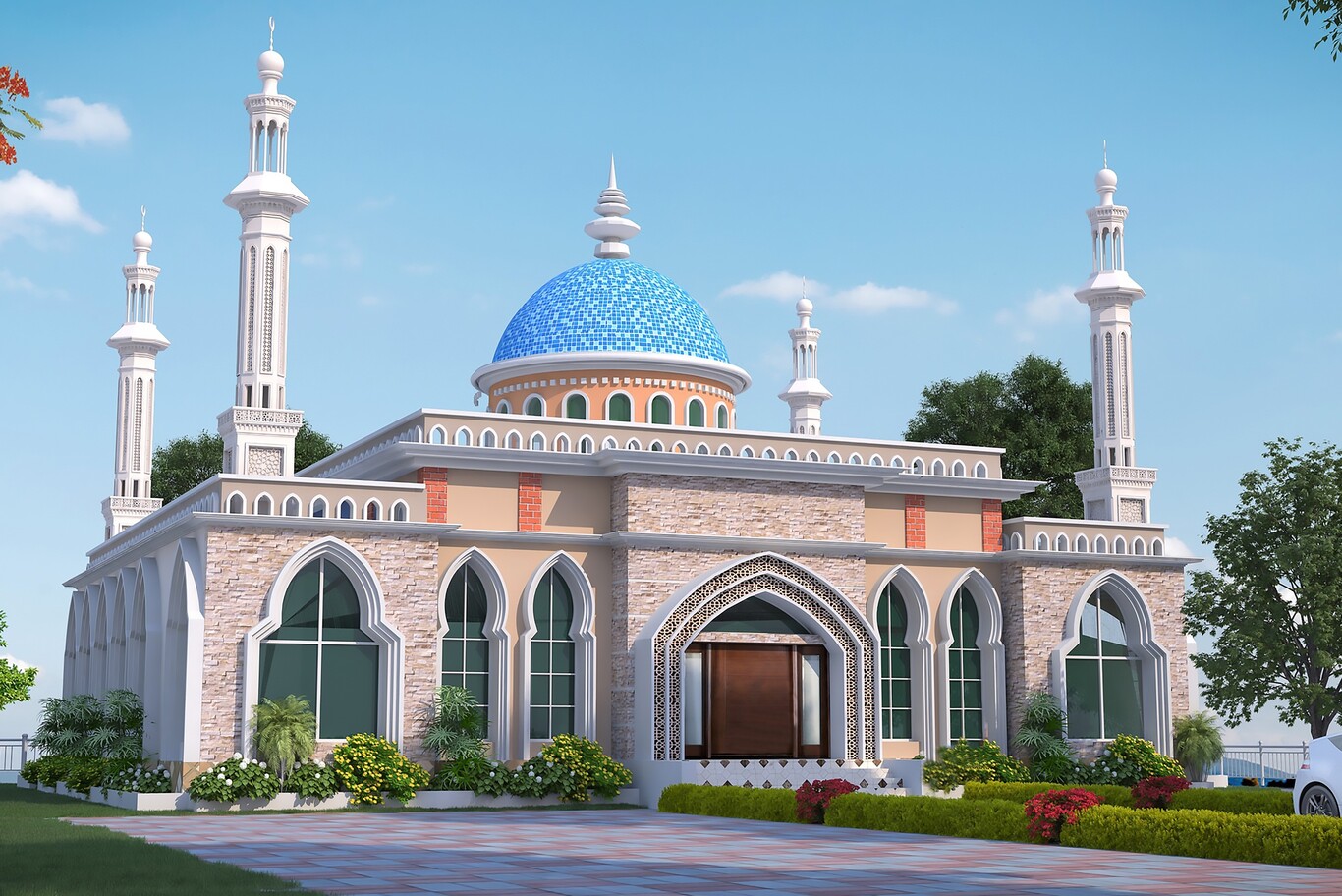
The minaret’s original function—a high point from which the muezzin calls worshippers to prayer—has been replaced by loudspeakers, but its architectural role as a vertical landmark that identifies the mosque within the urban fabric remains relevant. In the UAE, minaret heights are governed by local authority guidelines and must respect height limits set by master developers and aviation zones. Abu Dhabi’s Mosque Development Regulations specify proportional relationships between minaret height, dome diameter, and prayer hall area to maintain visual coherence.
The Sheikh Zayed Grand Mosque in Abu Dhabi, with minarets rising to 107 metres, represents the monumental end of this spectrum. Neighbourhood mosques in planned communities typically have minarets between 15 and 30 metres, scaled to the surrounding residential fabric. The design challenge is creating a minaret that reads as a landmark at the community scale without dominating or competing with adjacent buildings. BIM coordination is particularly useful here, since the minaret’s slender structural profile, internal staircase, and loudspeaker housing require precise coordination between architectural, structural, and electrical engineering teams.
Approval Process for Mosque Projects
Mosque approvals in the UAE follow a longer and more involved path than standard building permits. The site must first be designated for mosque use by the relevant planning authority—either allocated within a master plan or approved through a change-of-use application. The functional programme must be reviewed and approved by the religious affairs body (GAIAE, IACAD, or the relevant emirate Awqaf office) before architectural drawings are submitted for building permit review. Merka’s authority submissions guide covers the general Dubai Municipality process; mosque projects layer additional religious authority review on top of that standard sequence.
In Abu Dhabi, the Mosque Development Committee (operating under DMT) coordinates between the planning, design, and operational requirements. Their regulations specify not just architectural standards but also landscape requirements (mosque gardens must use low-water-demand planting), parking ratios (calculated per worshipper capacity, not per sqm of built area), and signage guidelines. Merka’s authority approvals team manages these multi-authority coordination cycles, tracking comments from each body and ensuring that a revision requested by one authority does not conflict with an approval already granted by another.
Contemporary Mosque Design in the UAE
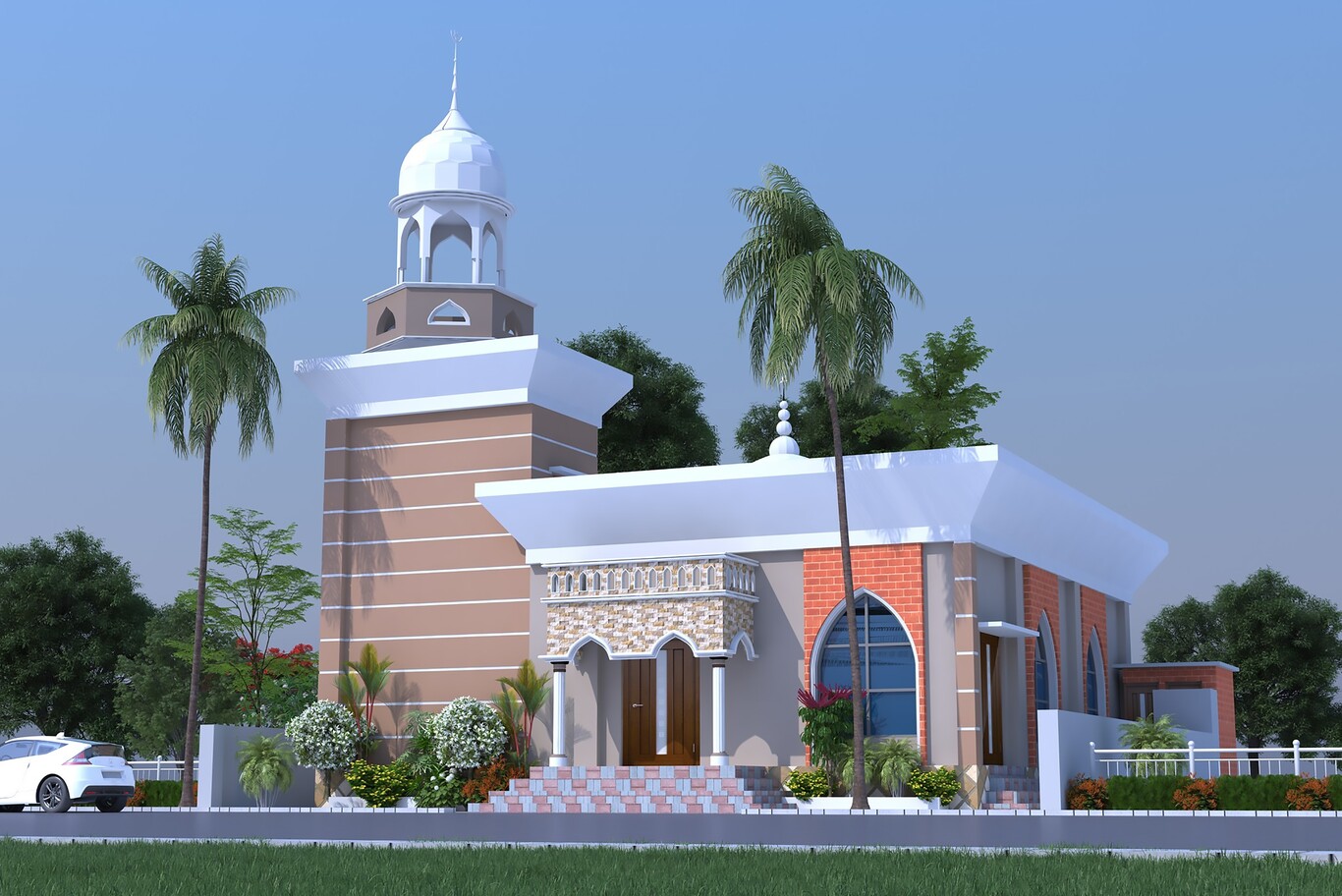
The tension between heritage preservation and contemporary expression defines mosque commissions across the Gulf. Regulatory bodies encourage design innovation—the Abu Dhabi Mosque Development Regulations explicitly state this—but the cultural sensitivity of the building type means that abstraction must be handled carefully. A geometric mashrabiya screen that filters light through the qibla wall can be accepted as a contemporary reinterpretation of traditional craft. A prayer hall with a folded-plate concrete roof can be accepted as structurally honest. A mosque with no recognisable dome or minaret, however, risks rejection during community consultation even if it satisfies every technical requirement.
What works, in practice, is an approach that preserves the spatial DNA of the mosque—the forecourt-to-prayer-hall sequence, the vertical marker, the qibla wall as the focal termination—while using contemporary construction methods and materials to achieve them. This thinking aligns with Merka’s broader approach to cultural and institutional projects, where programme requirements and cultural context set the parameters, and the architecture responds with precision rather than decoration.
Mosque projects require a design team that understands both the spatial discipline of Islamic architecture and the multi-authority approval process that governs religious buildings across the UAE. You can see how we approach institutional and religious commissions in our project portfolio, or get in touch to discuss a mosque or community building brief.
Frequently Asked Questions
What determines the orientation of a mosque in the UAE?
Every mosque must face the qibla—the direction of the Kaaba in Makkah. From Abu Dhabi, this bearing is approximately 246° (west-southwest); from Dubai, approximately 253°. The qibla direction fixes the position of the mihrab (the niche in the prayer wall where the imam stands), which in turn determines the depth, width, and structural module of the entire prayer hall. All other spaces—ablution areas, entrances, courtyards, minarets—are arranged around this primary axis.
Who approves mosque construction in Dubai?
Mosque construction in Dubai requires approval from two bodies. The Islamic Affairs and Charitable Activities Department (IACAD) reviews the religious and functional programme—prayer hall capacity, ablution facilities, female prayer areas, and imam accommodation. Dubai Municipality handles the building permit, reviewing the architectural, structural, and MEP drawings against the Dubai Building Code. Both approvals must align before construction can begin.
What is the Estidama requirement for mosques in Abu Dhabi?
All mosques in Abu Dhabi must achieve a minimum 2 Pearl Estidama rating under the Pearl Rating System. This is one tier above the standard residential requirement of 1 Pearl. The rating covers energy efficiency, water conservation, material sustainability, indoor environmental quality, and site development. Mosque-specific considerations include low-water-demand landscape planting, efficient ablution water systems, and HVAC strategies optimised for the intermittent high-occupancy pattern of prayer halls.
How close must a mosque be to residential areas in Abu Dhabi?
Abu Dhabi’s Mosque Development Regulations require a mosque within 350 metres of every home—a distance that can be covered in approximately five minutes on foot. This standard applies across the emirate and influences how mosque sites are allocated during master planning. The regulations are published by the Department of Municipalities and Transport (DMT) and enforced through the Mosque Development Committee.
What makes HVAC design for mosques different from other buildings?
Mosques experience rapid occupancy swings—from empty to full capacity within minutes at prayer time—which demands HVAC systems that can respond quickly without wasting energy during empty periods. Worshippers pray on the floor (sitting and prostrating), so the thermal comfort zone is the lower 1.5 metres of the room, not standing height. Underfloor air distribution or displacement ventilation systems deliver conditioned air at floor level, improving comfort and reducing energy consumption compared to ceiling-based systems.
Can a mosque design in the UAE be contemporary, or must it follow traditional forms?
Abu Dhabi’s Mosque Development Regulations explicitly encourage design innovation while requiring preservation of Emirati architectural heritage. In practice, contemporary structural systems, materials, and facade treatments are accepted when the fundamental spatial sequence of the mosque is maintained: the forecourt-to-prayer-hall progression, the vertical marker (minaret), and the qibla wall as the focal termination of the plan. Mosques that eliminate all recognisable traditional elements risk resistance during community consultation, regardless of their technical compliance.